
The AI Ear Moves From Phone to Toolbelt
AI voice receptionists changed the starting line for contractors. The durable edge is field voice memory that follows the HVAC tech into the jobsite and back.
How long does your customer wait before your competitor sounds ready?
That is the useful question behind the new wave of AI voice receptionist systems for home service contractors. Not “can AI answer?” It can. The better question is what happens after the first sentence.
Field note 1: the starting line moved
The old race began when the office called back, checked the board, and found a slot. The new race begins in seconds.
Harvard Business Review research on online inquiries found companies responding within one hour were nearly seven times more likely to have a meaningful conversation than those responding later. That was before AI voice systems made the first response feel instant.
Field note 2: the consensus is too small
The consensus says the AI receptionist is the product. I think that is the first relay handoff.
Proof one: speed without context creates rework. The customer explains the rattling unit, the prior repair, the strange smell, the access code, the dog in the yard. If that detail does not travel cleanly to the technician, the shop is fast at the front and slow in the field.
- Proof two: the field is where truth appears. The work order says “no cooling.” The roof says clogged coil, low charge suspicion, bad disconnect, and a customer who needs pictures for the landlord.
- Proof three: memory compounds. Ad spend resets every month. A truck depreciates. A searchable history of what customers said, what techs found, and how senior people reasoned becomes more valuable with every job.
Pick the last urgent customer request. How long until your technician had the full context in usable form?
Not a note somewhere. Not a memory in someone’s head. The actual words, searchable when the truck rolls.
Field note 3: HVAC is the first battlefield
HVAC is big enough and messy enough to expose the gap. Industry estimates put the U.S. HVAC market around $159B, with roughly 120,000 contractors. The Bureau of Labor Statistics counts HVACR mechanics and installers in the hundreds of thousands.
ServiceTitan, Housecall Pro, Jobber, and similar systems organize the workflow. But they still depend on humans typing reality after reality has already happened.
The next uniform has an AI ear
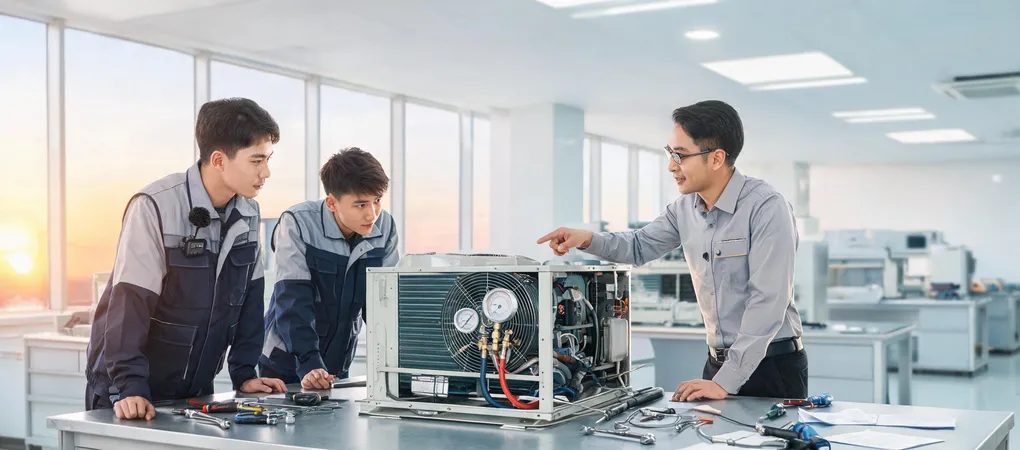
This is where Telalive and Hearit.ai HA-MIC01 fit. Telalive captures customer conversation memory at the phone layer. HA-MIC01 carries the ear into the bay, attic, crawlspace, roof, and doorway.
Not as surveillance. As worker-controlled, work-only memory. The technician keeps hands on tools while the job creates its own usable history.
“Robots need eyes. Field AI needs ears.”
The version designed in software assumes clean forms. The version shipped into the trades is voice, noise, judgment, interruptions, and the 11 minutes that evaporate between the wrench and the keyboard.
The AI receptionist changed the starting line. The wearable field ear changes what the business actually knows after the race begins.
From AI phone agents to custom hardware — we’ve got you covered.