
The $2,400 AI Receptionist Test
Charlotte’s AI voice trend points to harder trade math: phone agents cut receptionist cost, but the bigger value is field memory that hears the job in real time.
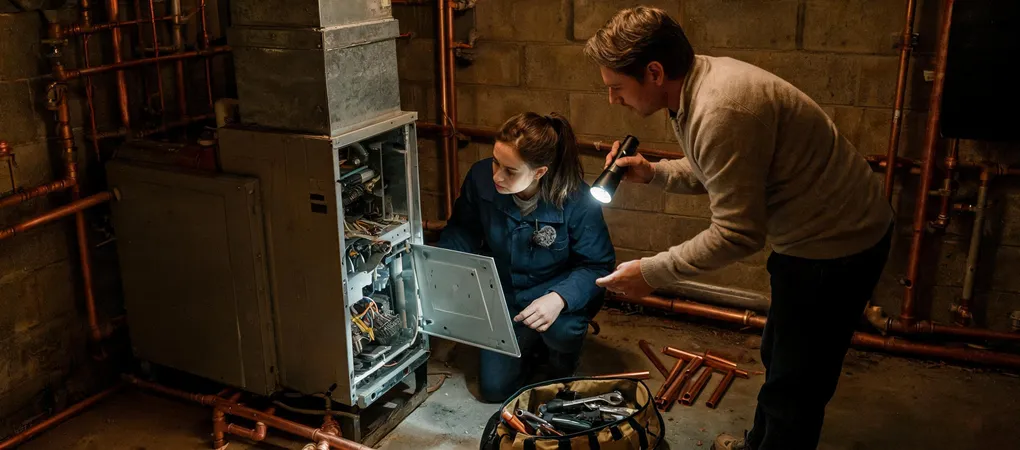
$2,400 a year now buys what many shops used to staff with a $40,000 front desk role.
That is the real reason the QCity Metro story about a Charlotte entrepreneur building an AI voice firm for small businesses is timely. Not because AI voice is shiny. Because the math has crossed a line that operators can actually feel.
The real cost of a human receptionist
Let’s use a simple model: The Ear Economics Model. Three parts: payroll, coverage, and memory.
A full-time receptionist is not just an hourly wage. The Bureau of Labor Statistics put the median annual wage for receptionists and information clerks at about $36,590 in May 2023. For a small trade shop, the practical all-in number often lands around $35,000 to $45,000 once you include the things owners quietly absorb.
- Base pay: $17 to $21 an hour over a full year puts you roughly in the $35,000 to $44,000 range.
- Benefits and payroll load: taxes, insurance, PTO, and basic admin do not disappear because the company is small.
- Training: someone has to teach the person your customers, neighborhoods, equipment language, warranties, and dispatch rules.
- Sick days and vacation: the work does not pause. The owner, dispatcher, or spouse fills the gap.
- Turnover: SHRM has estimated the average cost per hire at nearly $4,700. Even if your number is lower, context leaves with the person.
A good receptionist is valuable. But the expensive part is not friendliness. It is making the same capture-and-routing decisions all day, while being limited to one live conversation at a time.
Look, this is not a morality debate. It is capacity math.
What AI actually does for $200 a month
An AI phone agent at $100 to $300 a month is not a magical employee. It is a narrow voice system that does repetitive intake without getting tired.
For around $200 a month, it can collect the customer’s words, confirm address and equipment details, summarize the conversation, route the job, and keep the conversation searchable. Telalive is built for exactly this: customer phone conversations becoming memory your team can search later, not fragments living in someone’s head.
- Annual AI cost: $1,200 to $3,600.
- Working hours: 24/7, including lunch, holidays, and the hour after everyone is tired.
- Parallel capacity: one human handles one live conversation; an AI agent can handle ten-plus at the same time.
- Memory: what they said, in their words, available next visit.
Add up your receptionist’s salary, benefits, sick days, training, and the owner backfill time. What is the real number?
Then ask a second question: what parts of that role require human judgment, and what parts are repeatable voice capture?
Against the consensus, I do not think the big story is “AI replaces the receptionist.” That is too small.
The better operator move is this: stop spending human payroll on voice capture, and redeploy humans where judgment, empathy, escalation, and coordination matter.
The phone is only the first ear
For restaurants, clinics, salons, and local services, the AI receptionist is already a clean cost comparison. But in HVAC and skilled trades, the phone is only the front edge of the work.
The real facts happen in the crawlspace, at the condenser, beside the furnace, and at the customer’s door. The customer detail the tech can’t quite remember. The diagnosis you paid for twice because the work order was vague. The 30-year veteran whose pattern recognition walks out at retirement.
“Labor answers the moment. Memory improves the next one.”
HVAC is a serious first battlefield: roughly a $159 billion U.S. market, about 120,000 contractors, and around 425,000 technicians. Field-service SaaS owns scheduling, invoicing, and workflow. But it still depends on humans typing reality after a brutal day.
That is the gap. AI has eyes through cameras. Field AI still needs ears.
The math that makes the decision obvious
Here is the clean version. A human receptionist: $35,000 to $45,000 a year, one conversation at a time, limited by schedule, turnover, and memory. An AI phone agent: $1,200 to $3,600 a year, always on, ten-times parallel capacity, searchable voice memory.
At $200 a month, the AI line item is $2,400 a year. Against a $40,000 receptionist cost, that is a $37,600 difference before you count management drag.
But the deeper economic point is this: payroll resets every pay period. Memory compounds.
That is why we build Hearit.ai HA-MIC01 as the hands-free field ear, not as a cheap gadget and not as employee surveillance. Consent-first, work-only voice becomes service reports, work orders, and Frontline Work Memory while the technician stays focused on the job.
The Charlotte AI voice story is one signal in a bigger shift. Small businesses are learning that voice is not just communication. It is operational data.
Robots need eyes. Field AI needs ears. And the first Physical AI will not replace the technician; it will ride with the technician, turning the workday into memory the business can finally use.
From AI phone agents to custom hardware — we’ve got you covered.