
AI Receptionists Are Testing Your Memory
Leadsorbit’s AI receptionist launch shows where the market is going. The real advantage is conversation memory that survives the job and next visit.
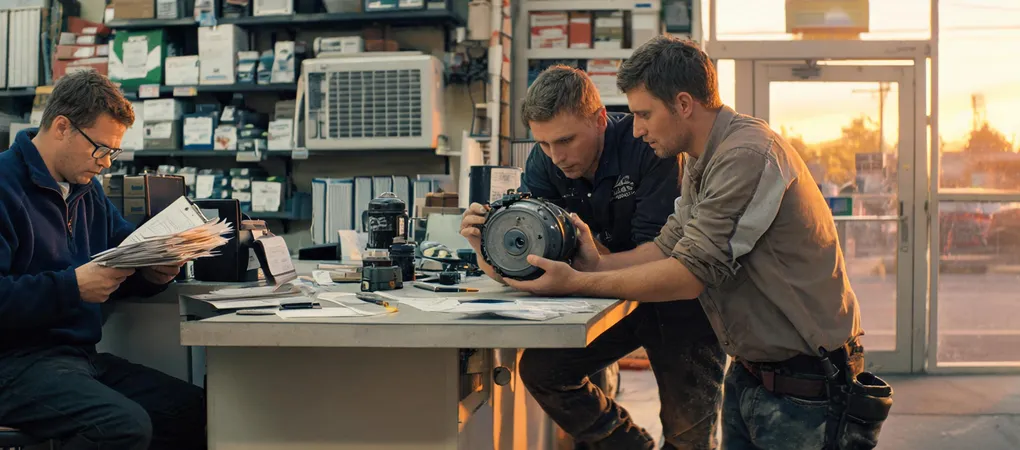
Last Thursday, a customer told you something important on the phone.
Not the appointment time. Not the address. The real detail. The upstairs bedroom stays hot only after 3 p.m. Their father sleeps there. The last technician said the return duct might be undersized, but nobody wrote that part down.
Now they are calling again, and your team is staring at a work order that says: “AC issue.”
That gap is where most businesses actually bleed context. Not in some spreadsheet. Not in a dashboard. In the space between what the customer said, what the technician heard, what the dispatcher typed, and what the company can remember a week later.
Leadsorbit is right about one thing
Leadsorbit.ai just announced an AI Receptionist for small business call handling and message automation. That is not surprising. The market is moving fast because owners are tired of phone work living in somebody’s head, somebody’s sticky note, or somebody’s half-finished text thread.
But the industry is still describing the problem too narrowly.
“The next generation of AI reception is not about replacing the person who answers. It is about preserving the conversation so the business can act like it remembers.”
A receptionist, human or AI, is only valuable if the intelligence from the conversation survives the conversation. If the call becomes another vague note, the company did not become smarter. It just became faster at producing vague notes.
Look, automation is useful. We ship AI systems. I believe in speed. But speed without memory creates a new kind of mess: more conversations captured at the surface, with the useful detail still evaporating underneath.
Conversations are the biggest database you never query
Every business already has a customer database. The problem is that the richest customer data is rarely inside it.
It is in the way the customer described the noise. It is in the hesitation before they mentioned budget. It is in the detail that the gate code only works after noon because the property manager changes it every morning.
- The CRM has: name, phone number, address, invoice history.
- The conversation has: urgency, fear, preference, constraint, past frustration, and the words the customer will use again next time.
- The work site has: what the technician actually saw, heard, smelled, tested, and ruled out.
IDC has long estimated that roughly 80% of enterprise data is unstructured. That number sounds abstract until you run a service business. Then it becomes obvious. Most of what matters is spoken, not typed.
McKinsey has reported that knowledge workers spend close to one-fifth of their time searching for and gathering information. In a shop, clinic, store, or field service team, that search often looks like something more ordinary: “Who talked to Mrs. Hernandez last time?”
And the answer is usually a person. That is the danger.
When memory lives in a person, every handoff is fragile. Every sick day creates fog. Every retirement walks out with patterns your company paid 30 years to develop.
Pick the last return customer. Without checking the system, what did your team say about their issue last visit?
Now check the work order. Listen to the gap between the real conversation and the sentence that survived.
The half-life of knowledge is shortest when your hands are dirty
In an office, a thought can survive long enough to become a note. In the field, it usually cannot.
A technician is crouched next to a condenser. A plumber is under a sink. A store manager is walking a customer through a damaged product return while two people are waiting at the counter. The thought is precise for maybe eleven minutes.
“The moment hands need to type, the diagnosis has already started collapsing into a generic phrase.”
By the time the work order gets updated, “compressor draws high amperage after long run cycle, likely heat-related failure pattern” becomes “check compressor.”
That is not laziness. That is work. Physical work compresses language because the job demands motion, not documentation.
- Before: the customer explains the real history, the dispatcher types a short summary, and the technician starts from a thin version of reality.
- After: the conversation becomes a searchable customer profile, with preferences, symptoms, promises, constraints, and next steps attached to the record.
- Before: the field diagnosis gets rewritten later from memory.
- After: the diagnosis is captured at the moment of the work, while the sound, smell, reading, and reasoning are still present.
This is why we built Telalive as voice capture for every customer call. Not just to answer. To turn what they said in their words into structured customer memory your team can search before the next visit.
And this is why MIC05 and MIC06 exist for the bay, the counter, the job site, and the field visit. The capture layer has to meet the work where the work actually happens, not demand that the worker return to a keyboard after the thought has cooled.
When every call becomes a customer profile
The practical change is simple. The business stops treating conversations as temporary events and starts treating them as permanent assets.
A customer calls about a recurring HVAC issue. The system captures the concern, the property details, the prior diagnosis, the part discussed, the tone of urgency, and the promise made. Next week, when the customer walks in or calls again, the team does not ask them to rebuild the story from zero.
- The customer your tech cannot quite remember: now has a timeline of conversations, service notes, and exact phrases.
- The diagnosis you paid for twice because the work order was vague: now has the original reasoning attached.
- The shift handoff where context died: now starts from the same memory, not a verbal relay.
- The senior tech whose pattern recognition is hard to teach: now leaves behind searchable examples of how they think.
The U.S. Bureau of Labor Statistics projects HVACR mechanic and installer employment to grow 9% from 2023 to 2033, faster than the average for all occupations. Demand is rising. Skilled judgment is scarce. That makes memory infrastructure more valuable, not less.
Revenue follows this kind of memory because action gets cleaner. The estimate fits the real problem. The second visit starts with history instead of confusion. The customer feels known, not processed.
The market is calling it AI reception. I think that is too small.
Leadsorbit’s launch is a useful signal. Small businesses are ready for AI to sit closer to the customer conversation.
But answering is not the finish line. Routing is not the finish line. Even summarizing is not the finish line.
“The finish line is a company that remembers what happened while the work was happening.”
That is Enterprise Memory.
Not another AI tool sitting on top of the business. The memory infrastructure underneath it. The layer that captures the call, the counter conversation, the field diagnosis, the veteran’s explanation, and the customer’s exact words before they flatten into “AC issue” or “customer upset.”
Businesses do not suffer from a shortage of software. They suffer from the 11 minutes that evaporate between the wrench and the keyboard.
The companies that win the next phase of AI will not be the ones with the most tools. They will be the ones whose work can finally remember itself.