
The Crawlspace Camera Has to Earn Its View
A practical framework for testing whether body-worn cameras can create usable crawlspace records before any AI or software claim.
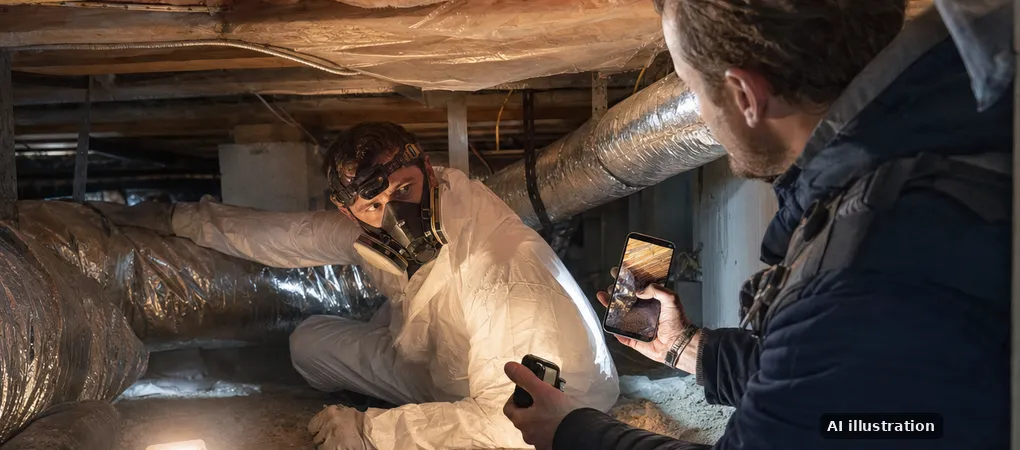
If your technician is prone in a crawlspace, what exactly is a chest camera seeing?
That is the practical question before any AI claim. Crawlspace work is not a clean walkthrough. It is elbows, knees, insulation, joists, vapor barrier, flashlight angle, and the tech turning their body because there is no room to turn their head.
A body-worn camera may help. It may also record the ground, a glove, or the technician’s own forearm at the exact moment the useful evidence appears.
Use the Four-Posture Test
The right lens for this problem is simple: the Four-Posture Test. Upright. Kneeling. Prone. Turning.
If a mounting position only works upright, it has not been tested for crawlspace work. Chest mount, shoulder mount, vest mount, handheld phone photo, and clip-on audio recorder should be compared against the actual postures of the job.
This is where the designed version and the shipped version of field work split apart. The designed version assumes clean evidence. The shipped version has a tech balancing on one elbow while trying not to tear duct wrap.
A camera position is not good because it records. It is good only if it preserves the part of the job the next person needs.
What a controlled test should measure
For crawlspace companies, the test should not start with software. It should start with wearability and evidence quality.
- Key-object visibility: Can the system see what matters: standing water, damaged duct, pest evidence, insulation gaps, structural concern, tag, gauge, or repair area?
- Snag points: Does the mount catch on joists, wiring, insulation, access doors, or straps when the tech turns?
- Heat and fatigue: Does the wearable change how long a tech can work comfortably in a confined space?
- Cleanup: Can the device and garment return from a dirty crawlspace without creating another maintenance burden?
Pick the last crawlspace report your team debated.
Could the next technician understand what was checked, what was explained, and what still needed review — without asking the original tech to reconstruct the visit from memory?
Why this matters to the report
The handoff is site to report to next visit. When the site record is thin, the report becomes a reconstruction. When the report is thin, the next visit starts with doubt.
Field-service SaaS owns the workflow. But the workflow depends on humans typing reality after a dirty, physical job. The economic asset is not another form field. It is the usable memory of what the technician observed, said, and decided while the evidence was still in front of them.
That memory compounds. A vague note depreciates the moment the van leaves. A permitted, searchable field record can support review, quoting, training, and preparation for the return visit.
Where HA-VEST01 fits
Hearit.ai HA-VEST01 is still in prototype iteration and pilot preparation. Garment prototypes and fit photos exist, including a V4.13 structural design with two-layer construction, module mounts, cable routing, and split power pockets; the concept is designed to link permitted on-site voice and optional images to the job, with usefulness to be validated in a controlled pilot.
No software claim should come before that physical test. Humans diagnose. Professionals review. The record should carry context, not pretend to replace judgment.
Crawlspace companies willing to compare a vest mount, phone, and clip-on recorder across upright, kneeling, prone, and turning work should join a controlled wearability test. The future input layer for home services will not be proven at a desk; it will be proven where the tech is trying to move without tearing the work apart.