
The Handoff Is Where Memory Dies
AI receptionists are arriving fast. The real edge is Enterprise Memory: capturing every call, visit, and handoff before detail fades.
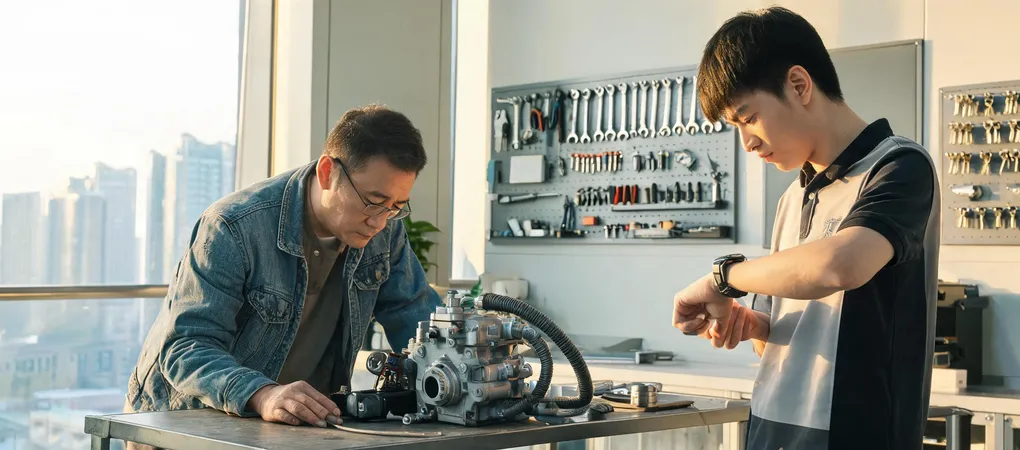
You know the moment.
A customer walks back in on Thursday and says, “I talked to someone last week. He said you’d know what I meant.” Your tech looks at the work order. Three words: noise when running.
The work happened. The conversation happened. The memory did not.
Now the customer has to retell the story. Your team has to re-interpret it. And somewhere between the first conversation and today’s decision, the specific detail that mattered dissolved into a generic note.
This is why the recent Leadsorbit.ai launch of an AI Receptionist matters. Not because small businesses need another automated front-desk tool. The industry is moving because owners are realizing the phone is not just a channel. It is one of the richest data sources in the company.
The receptionist is not the system. The handoff is.
A lot of the current AI receptionist conversation is still stuck on call handling. Answer faster. Route better. Collect names. Book appointments. Useful, yes.
But Look, the real operational pain starts after the conversation.
- The dispatcher heard urgency: but the ticket says “check unit.”
- The tenant explained the pattern: but the technician sees only an address and a time window.
- The owner heard a promise: but the person doing the work never got the wording.
- The senior tech recognized the symptom: but his reasoning stayed in the truck.
That is handoff entropy. Every transfer of context makes the detail thinner.
The customer does not feel your software stack. They feel whether your team remembers what they already said.
Conversations are the largest database nobody queries
Every business says it runs on relationships. Then it stores those relationships as fragments: a phone note, a technician’s memory, a text thread, a sticky note, a manager’s gut feeling.
The most valuable facts are usually spoken before they are typed. That is the problem.
Knowledge has a half-life, and that half-life is shortest when your hands are dirty.
Microsoft’s 2023 Work Trend Index found that people using Microsoft 365 spent 57% of their time communicating and only 43% creating. McKinsey has also reported that knowledge workers spend nearly 20% of their workweek looking for internal information or tracking down colleagues who can help.
Those numbers describe office workers. In field service, repair, property maintenance, retail service, and clinics, the gap is more physical. The information is not buried in a folder. It was spoken while someone was holding a tool, standing at a counter, or walking a job site.
Before: the vague work order
Take a property maintenance company.
A tenant calls about a dishwasher. They do not say “dishwasher issue.” They say it hums for eight minutes, stops before draining, and the same thing happened after the power flickered last month. They mention a smell. They mention a child’s cup stuck near the bottom rack two weeks ago.
- What the tenant says: a detailed timeline in their own words.
- What the ticket becomes: “Dishwasher not working.”
- What the technician receives: an address, a model if they are lucky, and a vague symptom.
Then the technician arrives and does the real thinking. He listens. He tests. He remembers two other units in the same building had pump failures after voltage dips. He tells the coordinator, “If this is the same batch, check units 3B and 4C too.”
But his hands are wet. The hallway is narrow. The next appointment is already waiting. By the time he gets to the keyboard, the diagnosis has collapsed into “replaced pump.”
Pick the last return customer. Without checking the system, what did your tech say about the issue last visit?
Now check the work order. Listen to the gap between what the person knew and what the company remembered.
After: every conversation becomes a customer profile
This is where AI reception starts becoming infrastructure.
With Telalive, the first call does not end as a loose note. It becomes searchable customer memory: the customer’s words, the symptom timeline, the urgency, the promise made, the details that should follow the job all the way to the person doing the work.
- Before: “Dishwasher issue.”
- After: “Tenant reports hum for eight minutes, no drain cycle, power flicker last month, odor near lower rack, prior similar issue in same building.”
- Before: the next person asks the same questions again.
- After: the team starts from context, not from zero.
And the memory cannot stop at the phone. The bay, the store aisle, the field visit, the hallway diagnosis — that is where the most expensive knowledge is created.
MIC05 and MIC06 are built for that moment. Wearable voice capture lets the technician explain the finding while the finding is still in front of him. The thought never has to outlive the wrench.
This is also a labor problem
The Bureau of Labor Statistics reported median employee tenure in the U.S. at 3.9 years in January 2024. That is not a complaint about loyalty. It is a management reality.
If your company’s memory lives inside people only, then every resignation, vacation, promotion, sick day, and retirement changes what the company knows.
The 30-year veteran does not just perform work. He carries pattern recognition the business never saved.
This is the part most AI receptionist products understate. They can greet. They can schedule. They can collect details. But the bigger question is whether the business is building a durable memory from all of it.
Because revenue in a service business is not just created by getting someone into the calendar. It is created when detail survives long enough to shape the right action: the right part on the truck, the right technician assigned, the right expectation set, the right follow-up made in the customer’s own language.
Enterprise Memory is the category underneath the trend
Leadsorbit’s launch is part of a clear industry movement: AI is moving into the first layer of customer interaction for small businesses. That movement is real. It will continue.
But I do not believe the winning layer is “an AI receptionist.” I believe the winning layer is Enterprise Memory.
- It captures: calls, walk-ins, field visits, in-bay diagnoses, and handoffs.
- It structures: customer history, work-order detail, symptoms, commitments, preferences, and next steps.
- It recalls: what they said last time, what your team observed, and what changed since then.
- It teaches: new staff the patterns your best people already know.
That is what we are building at GMIC AI. Telalive captures the customer conversation. MIC devices capture the work conversation. Together, they close the gap between work happening and work being remembered.
Not another AI tool sitting on top of the business. Memory infrastructure running underneath it.
The future belongs to companies that remember
Small businesses do not need more dashboards that look smart after the fact. They need the 11 minutes that evaporated between the wrench and the keyboard. They need the shift handoff where context died. They need the exact phrase the customer used before everyone translated it into a bland category.
AI reception is a good beginning. But the phone is only one place where truth appears.
The real company memory is built wherever work speaks: at the counter, in the bay, inside the apartment, beside the machine, during the diagnosis, before the detail fades.
The businesses that win will not be the ones with the most AI tools. They will be the ones whose knowledge no longer disappears the moment the conversation ends.