
Why a Photo of a Water Stain Rarely Supports a Repair Quote
The homeowner, the technician and the estimator are talking about the same leak with different evidence. A record organised by issue number could give them one shared basis.
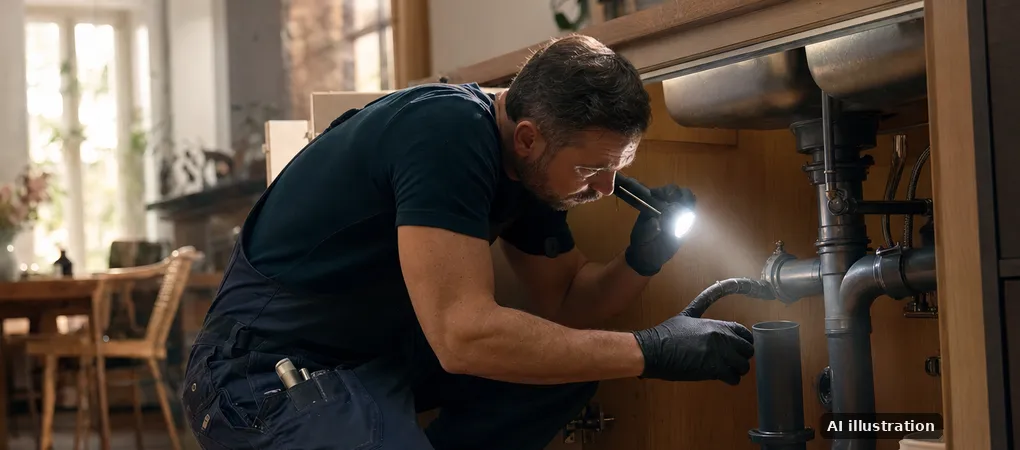
The homeowner photographs a stain under the sink. The technician finds a suspect joint. The estimator starts writing a scope. All three are talking about the same problem, but they are not working from the same evidence.
Where exactly is the stain relative to the fittings? Is the cause confirmed or only suspected? Does the cabinet have to come apart? Which restoration work is included, and which is not? A single photo answers none of those questions, and the gaps turn into follow-up calls, revised quotes and, sometimes, a return visit that happens only because the first visit left too little on record.
A visible stain is not a confirmed leak
Plumbing makes one distinction especially important: what can be seen is not the same as what has been confirmed. A stain shows that water was there. It does not show where the water came from. A camera cannot see inside a wall, and it cannot replace leak detection or the technician’s testing. Any record that presents a stain as a diagnosis sets up the next dispute.
One issue, one number
We are exploring a way to organise on-site images, the technician’s spoken notes and inspection results by issue number:
- K-01, kitchen sink supply joint: what was visible, and the matching clip or photo.
- Basis for the cause: what the technician checked, or what still needs checking.
- Scope: parts, disassembly and anything explicitly excluded.
- After the repair: the post-repair check the technician performed, under what conditions, and the result.
The homeowner does not need to watch a video of the whole job. They need to see what a given issue means for the work and what is still unconfirmed. The same numbering carries through to the quote and to the completion check.
What would count as value, and how we would test it
HA-VEST01 is a wearable AI vest in development, designed to capture permitted images and spoken observations while a technician works and to link them to the job, with professional review before anything is shared. It is in prototype iteration and pilot preparation. Under-sink work is a hard test for it: when someone is bent into a cabinet, a chest-mounted camera can be blocked by the door or the technician’s own arms. So a pilot would compare it directly with a phone and a small clip-on recorder.
The possible value is concrete and measurable: fewer clarifying questions before a quote, one less round of rewriting notes, fewer return visits caused by missing information. Each has to be compared with the current process, and return visits have to be sorted by cause. Some are necessary rechecks, some are workmanship issues, and only some come from missing information. The professional’s judgement stays at the centre. What the vest and the software can add is a clear, reviewable record of the context behind it.
An invitation
If you run a plumbing service team, walk us through one job where missing information led to extra questions or a return visit. Together we can judge whether that workflow is worth a pilot.