
Voice AI Is Really After-Hours Memory
Voice AI in restaurants points to a bigger shift: turning after-hours interruptions into owned work memory that owners can review when life is finally quiet.
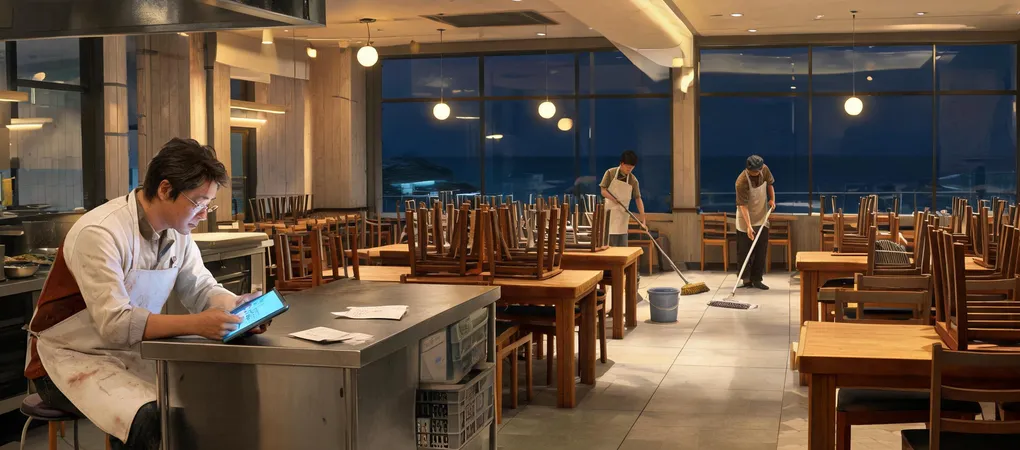
Everyone says the Loman AI and SpotOn partnership is about restaurants taking orders faster. The real problem is the opposite: local businesses were designed around open hours, then quietly shipped with owner-hours.
You know the moment. Fork halfway to your mouth. Your kid is explaining something important. The phone lights up, and your body answers before your mind decides.
The Designed Day / Shipped Night Framework
Here is the reusable lens: every small business has a Designed Day and a Shipped Night. The designed day has staff, menus, counters, systems, schedules. The shipped night has one owner, one phone, and too many details that cannot wait politely until morning.
- Interrupt: the call pulls you out of family, rest, or focused work.
- Interpret: you translate messy human speech into action.
- Remember: you carry the detail in your head until someone needs it later.
That is why restaurant voice AI matters beyond restaurants. Business Wire’s announcement that Loman AI is bringing voice AI into SpotOn POS restaurants is not just a POS feature story. It is a signal that the front counter is becoming memory.
The National Restaurant Association has described U.S. foodservice as a trillion-dollar-plus industry, and it has also noted that most restaurants are small businesses, with nine in ten employing fewer than 50 people. That matters because small teams do not suffer from lack of software. They suffer from details landing in the wrong human brain at the wrong hour.
When was the last time you ate dinner without your phone on the table?
Not silent mode. Not face down but mentally present. Actually off-duty.
The Durable Rule
The principle is simple: AI is most useful when it converts interruption into memory. Not when it sounds clever. Not when it adds another dashboard. When it lets a human stop being the temporary storage device for the business.
The future of work is not humans talking to software. It is work becoming searchable as it happens.
This is why we think about voice at GMIC AI as an input layer, not a gadget category. Telalive turns customer conversations into searchable memory. HA-MIC01 does the same for spoken work in physical environments, where hands are busy and the keyboard is somewhere else.
But the broader point is data sovereignty. If voice AI is going to sit at the edge of real work, the business needs to own what was said, what was decided, and what context should carry forward. A summary is not paperwork. It is proof that the business can remember without putting the burden on one tired person.
Freedom Is a Systems Property
There is a human cognition issue here. People are bad at being always-on memory. We compress, blur, and rewrite details under stress. Then we blame ourselves for being distracted.
- A restaurant order: special request, allergy note, pickup timing, regular customer preference.
- A repair conversation: what they said in their words, searchable next visit.
- A handoff: the place where context usually dies.
Voice AI in a restaurant is not a novelty. It is one more proof that the next business system will be judged by a quiet question: does it give the owner their mind back after hours?
The best AI will not make owners more available. It will make the business less dependent on their availability. That is the reframe: the phone can finally stay face down because the business still heard what mattered.
From AI phone agents to custom hardware — we’ve got you covered.