
Voice AI and the End of the Human Buffer
Voice AI is not only faster ordering. It is a boundary against interruption, giving SMB owners their memory, evenings, and attention back without becoming the switchboard.
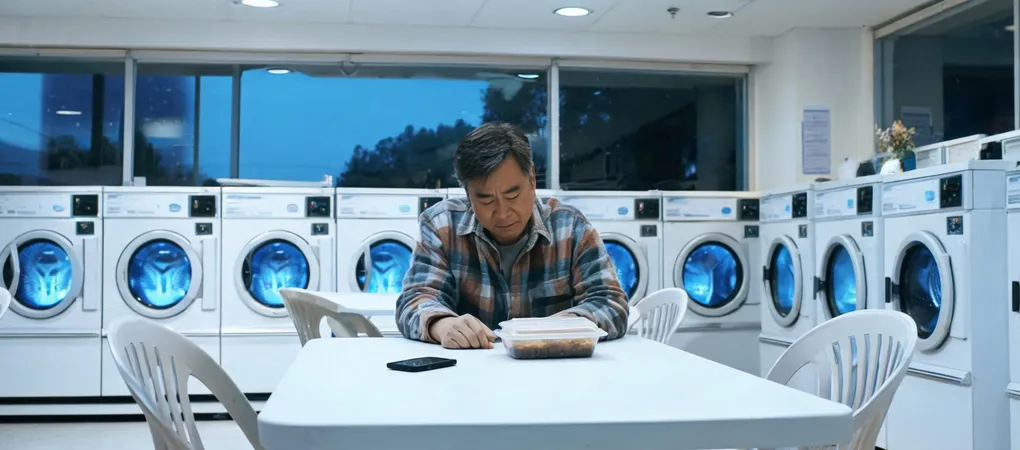
Everyone says restaurant voice AI is about taking the order faster. The real problem is the opposite: too many owners and managers are still being used as the shock absorber for systems that cannot listen.
It is 7:42 p.m. You finally sit down. Your phone is face down next to the plate, but you still see it light up from the corner of your eye.
The interruption is not the phone. The interruption is the context only you carry.
A shift supervisor is asking whether to remake an order. A supplier left something by the wrong door. A customer is upset because the note they gave earlier did not travel with the work.
You answer because you are responsible. But more precisely, you answer because the business still depends on your memory to connect pieces that should already be connected.
The invisible job: being the human buffer
Restaurant Technology News recently covered SoundHound AI bringing voice and agentic AI into ordering, drive-thru automation, and guest service. On the surface, this reads like a restaurant technology story.
I think it is bigger than restaurants. It is a signal that businesses are starting to put ears at the edge of operations, where customers speak, details change, and work becomes real.
- At the counter: a guest changes the order twice and adds an allergy note.
- On the phone: a customer explains the same problem in their own words, with one detail that will matter later.
- On the floor: an employee notices the pattern before the system has a field for it.
The National Restaurant Association projected U.S. restaurant industry sales would top $1.1 trillion in 2024. That number is large, but the lived reality is small and physical: headsets, counters, tickets, staff changes, impatient lines, and a manager making dozens of context decisions per hour.
This pattern is not unique to restaurants. Independent clinics, auto shops, home-care agencies, retailers, contractors, and local service companies all run on spoken details that appear for a moment and then scatter.
When was the last time you ate dinner without your phone on the table?
Not because you wanted to scroll. Because somewhere in the business, a detail might need the only person who remembers the whole story.
I call this the human buffer layer.
The human buffer layer is the owner, manager, dispatcher, senior employee, or lead tech who absorbs ambiguity between the real world and the software. Software wants clean fields. People speak in fragments, corrections, emotions, shortcuts, and stories.
Why always available feels heavier than busy
Being busy is not the same as being interruptible. Busy has a shape. Interruptible has no edge.
The reason the dinner phone buzz hurts is not that it takes three minutes. It is that your brain has to reload the whole business for those three minutes.
You do not carry tasks in your head. You carry unfinished loops.
Cognitive psychology has studied how unfinished tasks stay mentally active; the Zeigarnik effect is one name often associated with this. Owners do not need the term to recognize the feeling.
It is the open tab in your mind about the customer your employee cannot quite remember. The diagnosis you paid for twice because the work order was vague. The shift handoff where context died.
This is where voice AI becomes more interesting than automation. A good voice agent does not merely respond. It closes loops.
It takes the routine order. It asks the clarifying question. It captures the allergy note, the special request, the irritated tone, the corrected address, the promise made at 4:18 p.m. Then it turns that into a summary a human can trust.
From voice automation to enterprise memory
The next question is not whether AI can talk. The next question is who owns what the business learns when AI listens.
If every customer conversation becomes trapped inside a tool you cannot search, export, govern, or connect to your work records, then you did not build memory. You rented a nervous system.
Enterprise memory means the business can remember what happened without forcing one exhausted person to remain mentally on duty. It means what they said in their words, searchable next visit. It means the detail survives the shift change.
This is why we built Telalive around customer phone conversation memory, not just call handling. The goal is not to make an owner chase every ring more efficiently. The goal is to turn spoken customer reality into clean, searchable work memory.
The same principle shows up in field work. Hearit.ai HA-MIC01 captures spoken work at the moment it happens, with consent-first, work-only memory, so field facts do not have to be reconstructed after a long day at a keyboard.
That is the broader category I care about: the input layer for enterprise memory. Not more dashboards. Ears where reality enters.
The relief is not speed. It is closure.
Restaurants make this visible because they are compressed operations. High volume. Thin timing. Staff handoffs. Guest emotion. The Bureau of Labor Statistics JOLTS data has consistently shown accommodation and food services among the sectors with high quit rates, which means memory walks out the door often.
But every service business has its version. The veteran employee who knows from tone what kind of problem this will become. The manager who remembers which customer hates surprises. The owner who can connect a sentence from Tuesday to a repair on Friday.
- Before: the business asks a person to stay reachable because context is fragile.
- After: the business captures context as work happens, and the person reviews the summary.
- The change: less raw interruption, more finished memory.
This has to be done with discipline. Consent matters. Transparency matters. Employees should not feel watched, and customers should not feel tricked.
Good AI memory is not surveillance. It is the opposite of hallway interrogation. Instead of asking, again and again, what exactly did they say, the business has approved work memory that preserves the detail without turning a human into the archive.
The next layer of AI is not a faster app. It is a boundary around human interruption.
For an owner, time freedom rarely starts with a vacation. It starts with a normal Tuesday night where the phone can stay face down, and your body believes it.
At 9:00 p.m., you read a summary. Routine items handled. One exception flagged. One decision queued for morning. No drama. Just closure.
That is what the SoundHound news points toward, beyond the drive-thru. Voice AI is becoming part of work because voice is where reality enters the business first.
The owner used to be the edge of the system. When the business finally gets ears, the owner can stop being the place where every unfinished sentence goes to wait.
From AI phone agents to custom hardware — we’ve got you covered.