
The Weekend Is Your Real AI Test
Leadsorbit s AI Receptionist shows where SMB calls are heading. The real prize is time freedom: every conversation captured, remembered, and summarized.
The call comes when your hands are full
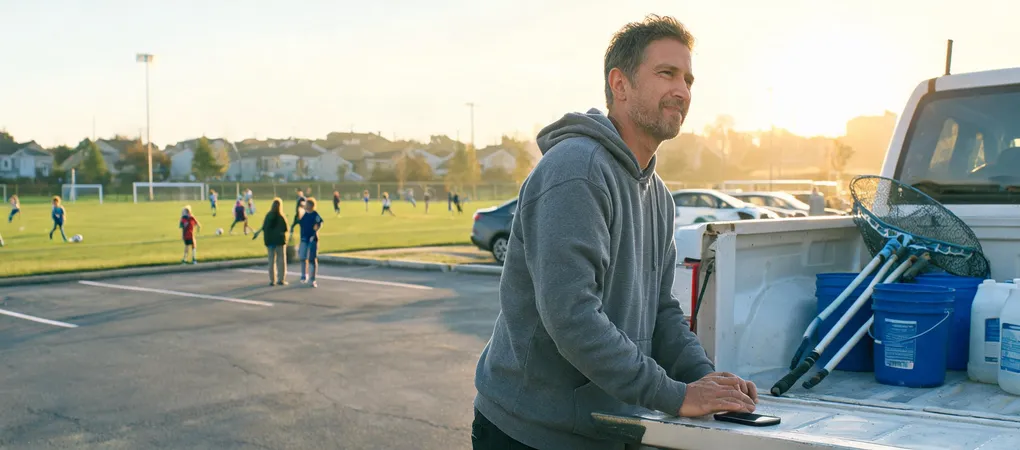
It is Saturday morning. You are standing beside a youth soccer field with a paper cup of coffee going cold in your hand, trying to watch your kid take a corner kick.
Then your phone starts buzzing. A customer is describing a pump that “sounds like gravel,” a gate code that changed, and something your tech supposedly said two visits ago.
You step away from the sideline. You cover one ear. You say, “Text me the address,” even though what you really need is not the address.
You need the story. In their words. Before it gets flattened into “pump issue” on Monday morning.
Leadsorbit is right about the pressure
Leadsorbit.ai just announced an AI Receptionist for small business lead automation. That matters because the category is moving fast. Owners are tired of making the front door of the business depend on whoever happens to be near the phone.
But here is where I think the conversation has to go next: the point is not only that AI can pick up. The point is whether the business remembers what was said after the call ends.
“Small businesses do not need another inbox. They need a memory that forms while the work is happening.”
That is the line between an AI receptionist as a tool and AI as infrastructure. One handles a moment. The other changes the weight you carry home.
Because the real burden of being always available is not the ringing. It is the management detail that attaches itself to your brain afterward.
Always available means always remembering
Most SMB owners I know are not just answering calls. They are acting as the living bridge between the customer, the crew, the system, the invoice, and the work that actually happened.
The customer says, “The tall guy was here last time and said the breaker might be weak.” The work order says, “Check electrical.” Your tech looks at it Monday and has to rediscover the whole trail.
- The customer your tech cannot quite remember: familiar face, blurry details, awkward restart.
- The diagnosis you paid for twice: because the first explanation never made it past a vague note.
- The shift handoff where context died: Friday’s conversation becomes Monday’s guessing game.
This is why the “AI receptionist” wave is important, but incomplete. If the system only produces another notification for you to clean up later, it has not given you time back. It has just moved the anxiety into a different folder.
Look, the owner does not need a prettier transcript. The owner needs to stop being the only person who knows what the customer meant.
When was the last Saturday you watched the whole game without your phone becoming a second job?
Not silent mode. Not “I’ll check it in five minutes.” Actually present, because the business was capturing the detail without you holding it in your head.
The hidden cost is cognitive custody
The Alternative Board has reported that a large majority of small business owners work more than 40 hours a week, with a meaningful share working 60-plus. Anyone who has owned a shop, clinic, service company, or field crew knows those hours are not clean calendar blocks.
They leak. Into dinner. Into weekends. Into the passenger seat while your spouse is driving and you are trying to reconstruct what someone said from memory.
Microsoft’s Work Trend Index has found that many workers struggle with not having enough uninterrupted focus time. For an owner, the problem is sharper: the interruption is not just a task. It is a chain of responsibility.
A customer call becomes a promise. A promise becomes a note. A note becomes a dispatch question. A dispatch question becomes a technician waiting in a driveway while you search your memory.
What changes when the business remembers for you
This is the reason we built Telalive as more than call handling. Telalive captures the customer conversation, turns it into searchable customer memory, and structures the useful detail so the next person does not start from zero.
The customer says the pump sounded like gravel after the last storm. Telalive keeps that phrase, links it to the customer, and turns it into work-order context your team can actually use.
- Before: you carry the nuance until someone asks you later.
- After: the summary is waiting, with the customer’s words preserved.
- Before: your weekend call becomes Monday’s memory test.
- After: your team sees the reason, history, urgency, and next step.
And the same principle applies away from the phone. In the bay, in the store, on the job site, the best information often appears when nobody is typing.
That is where MIC05 and MIC06 matter. A senior tech explains why this failure pattern looks different. A field lead talks through the real cause while holding a tool. A customer adds the one detail that changes the diagnosis.
Knowledge has the shortest half-life when hands are dirty
Knowledge has a half-life. And that half-life is shortest when your hands are dirty.
The 11 minutes that evaporate between the wrench and the keyboard are where companies lose the good version of the truth. By the time someone writes it down, the sharp edge is gone. “Intermittent vibration after load” becomes “noise.” “Customer says it only happens after rain” becomes “check unit.”
The U.S. Small Business Administration counts more than 33 million small businesses in the United States. Most of them do not have spare management layers waiting to clean up context. The owner is the layer.
That is why I do not believe the next chapter is “more AI tools.” Tools still ask you to manage them. Infrastructure removes a burden you have been carrying so long you stopped naming it.
From receptionist to Enterprise Memory
Leadsorbit’s launch is a signal. The market understands that the front desk is changing. But the deeper shift is not automation at the edge of the business. It is memory across the whole company.
Enterprise Memory means every important conversation has a place to land. Phone calls. Counter chats. Field explanations. In-bay diagnosis. The customer’s exact wording. The veteran’s pattern recognition before retirement turns it into silence.
“The work should not have to survive long enough to be typed. The memory should form where the work happens.”
When that happens, revenue becomes less dependent on heroic recall. Not because the owner calculated some spreadsheet fantasy, but because the next visit starts with knowing. The right part gets ordered. The right question gets asked. The right promise is kept.
And the owner gets something more valuable than a dashboard.
The relief is physical
The real test of this technology is not whether it sounds polite. It is whether you can leave your phone face down for an hour and feel your shoulders drop.
It is whether Monday morning comes with summaries instead of fragments. Whether your team already knows what they said last time. Whether the business kept listening while you were allowed to be a person.
That is where AI reception moves from novelty to infrastructure. Not louder automation. Quieter ownership.
The phone can ring. The work can keep moving. The memory can form without you holding the whole company in your head.