
When Your Phone Finally Clocks Out
Beside’s $32M raise proves AI voice is hot. SMB owners need more than a receptionist—they need memory that lets the phone clock out at night and stay there.
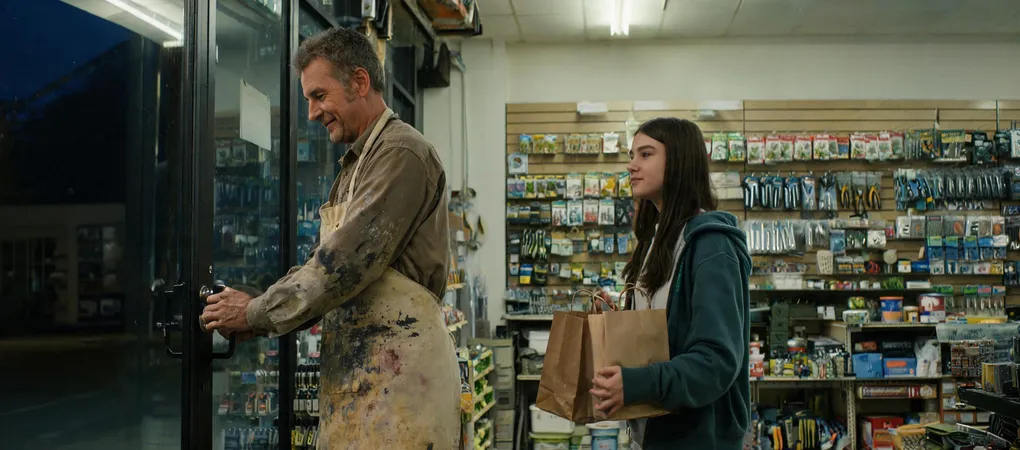
You are halfway through dinner when your pocket buzzes against the chair.
You already know the posture. One hand still near the plate. One eye on your family. One thumb deciding whether tonight belongs to you or the business again.
Maybe it is a customer describing a furnace noise in their own strange vocabulary. Maybe it is a supplier confirming a part. Maybe it is a regular who cannot remember the name of the tech who came last time, but remembers exactly how the truck sounded when it pulled into the driveway.
So you pick up. Not because you love interruption. Because you know what happens when detail lands in the wrong place.
Beside raised $32 million. The question is what comes after the greeting.
Fortune reported that Beside, an AI voice startup, raised $32 million to build an AI receptionist for small businesses. That is a clear signal: the market has finally understood that the front line of a small business is still the phone.
I am glad the industry is waking up. But the greeting is not the hard part.
“The real burden is not answering the phone. The real burden is carrying the detail afterward.”
A receptionist says hello. A business memory remembers that Mrs. Alvarez called the valve a “little silver elbow,” that your senior tech heard the same symptom last winter, and that the last work order said “checked unit” when it should have said what was actually found.
That is the part owners keep in their heads. At night. On Sunday. In the truck. In the shower. During the birthday dinner they technically attended.
Always available becomes always responsible
The Bureau of Labor Statistics American Time Use Survey has consistently shown what owners already know in their bones: self-employed people work differently from employees, including more blurred evenings, weekends, and work done at home. You do not need a research paper to confirm it. You live inside the blur.
And the phone is only the visible part. The invisible part is the management residue.
- The customer your tech cannot quite remember: “Was this the one with the upstairs unit, or the crawlspace job?”
- The diagnosis you paid for twice: not because anyone was careless, but because the first explanation collapsed into a vague note.
- The shift handoff where context died: one person understood the situation perfectly at 4:45 p.m.; by 7:30 a.m., the system had three words and a phone number.
This is why I keep saying businesses do not need more AI tools. They need memory infrastructure.
Knowledge has a half-life. And that half-life is shortest when your hands are dirty.
When was the last time you charged your phone in another room and still trusted tomorrow morning’s details?
Not because you stopped caring. Because every customer’s words, every callback reason, and every job detail had somewhere better to live than your head.
The 11 minutes between the wrench and the keyboard
In a shop, in a bay, in a service van, the best explanation usually happens before anyone opens the software. A tech hears a sound. A manager asks one clarifying question. The customer adds a detail that changes the diagnosis.
Then work happens. Hands get dirty. Another person needs help. The phone rings again. By the time someone types, the thought has already been sanded down into something safe and generic.
That is the gap Enterprise Memory exists to close.
Telalive captures every customer call as voice, then turns it into searchable customer memory and structured work-order detail. Not a transcript dumped into a folder. What they said in their words, organized so the next person does not have to reconstruct the conversation from scraps.
The AI receptionist should not become another inbox
A lot of AI phone systems will create a new pile. Summaries to read. Recordings to skim. Tasks to approve. Another place where the owner becomes the final parser of the business.
That is not freedom. That is a nicer-looking leash.
“If the AI gives you more to check, it did not give you time back. It just changed the shape of the interruption.”
The standard should be simple. At the end of the day, you see what matters. Who called. What changed. What needs a human decision. What was already handled. What should be attached to the customer record so your team can act tomorrow without asking you to replay the night.
Microsoft’s 2023 Work Trend Index found that 68% of people said they did not have enough uninterrupted focus time, and 64% struggled to find the time and energy to do their work. For an SMB owner, the issue is even sharper: your interruptions do not end when the laptop closes. They follow you into the driveway.
Memory has to meet the work where it happens
That is why phone capture alone is not enough. The customer call is one half of the truth. The other half happens in the bay, behind the counter, beside the machine, or on the job site when the actual work talks back.
MIC05 and MIC06 are built for that moment. Wearable voice capture lets the diagnosis be captured while the tech is still looking at the problem, before the phrase becomes “checked and advised.”
- At the front desk: the customer’s exact explanation becomes searchable next visit.
- In the field: the tech’s diagnosis is captured at the moment of work, not reconstructed later.
- Across the team: the 30-year veteran’s pattern recognition stops living only in one person’s nervous system.
Revenue is not a number floating above the shop. It is the service writer knowing the history. It is the tech not repeating the same discovery. It is the customer feeling, immediately, that your company remembers them.
That is what Enterprise Memory means: the capture layer between work happening and work being remembered.
The real promise is not speed. It is release.
The Beside funding round tells us AI voice for small business is no longer a side experiment. Capital is moving because the phone is still where business begins.
But the winners will not be the systems that simply sound pleasant. They will be the systems that let the owner stop being the memory of the company.
Look, owners do not want a dashboard at dinner. They do not want another app glowing on the table while the food gets cold.
They want to turn the phone over and feel their shoulders drop.
The real luxury is not automation. It is putting the phone in the other room and believing the business will remember what happened without you.