
Your Most Valuable Employee Is an Unsaved File
Your most valuable employee isn't expensive for what you pay him — but for what walks out the door the day he leaves. Why the real moat in the next phase of AI is the memory only you own.
Everyone in the trades worries about labor cost. The wages, the benefits, the person who calls in sick on the busiest Saturday. The real problem is the opposite.
Your most expensive employee isn’t expensive because of what you pay him. He’s expensive because of what you lose the day he leaves — and you’ve never written a word of it down.
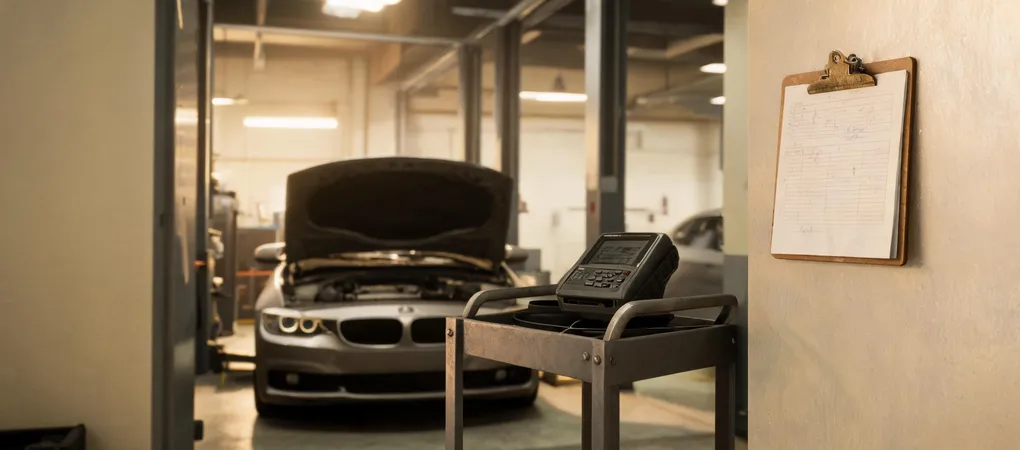
Take a mid-sized auto-repair shop. Three bays, a diagnostic rig, and one technician who’s been turning wrenches for thirty years. A car comes in with a vague electrical fault. The new hire chases it for four hours and replaces two good parts. The veteran listens to it idle, asks one question about when it started, and goes straight to the connector that’s always the culprit on that model. Fifteen minutes.
That fifteen-minutes-versus-four-hours is the entire margin of the shop. It isn’t in the building. It isn’t in the lift. It’s in his head.
Here’s the part nobody puts on the balance sheet. When that technician retires, the shop doesn’t lose one salary. It loses the thirty years. The next hire re-learns the same lessons the slow, expensive way — by making the misdiagnoses the veteran stopped making a decade ago. The shop pays for that knowledge twice: once when he earned it on the job, and again when it walks out the door and the replacement re-earns it on the customer’s dime.
Pick your most valuable person. Now write down what they know that no one else in the building does.
You can’t — and neither can they. It was never a form. It lives in the half-sentence they say while they work, and then it’s gone.
I spent seventeen years between the version of a product a factory designs and the version it actually ships. The spec says one thing; the line does another; the money lives in that gap. A repair shop has the same gap. The process, on paper, says “document the diagnosis in the work order.” What gets written is three words and a part number. Everything the technician reasoned through — the part that’s worth thirty years — evaporates between the wrench and the keyboard.
That gap, between what a business knows and what it records, is the most expensive thing nobody owns.
The fix isn’t a better form. You’ve tried the better form. Nobody fills it out. The fix is catching the reasoning at the moment it happens — spoken, in the bay, hands still on the car — and turning it into something structured and searchable. That’s the bet we’re making at GMIC AI with wearable capture: not to store more, but to catch the signal before it becomes a memory of a memory.
The next AI race is upstream
And here’s the part the strategists should sit with. The next phase of AI is not about who has the bigger model. Everyone has the same model; you can rent a frontier brain by the hour. What you cannot rent is thirty years of one shop’s reasoning. The edge is no longer the intelligence — it’s the proprietary memory you feed it. A general model grounded in your shop’s accumulated judgment beats the best general model grounded in nothing.
Which makes ownership the whole game. If that memory lives on someone else’s platform, you’re renting your own expertise back by the month. If it lives where you control it, it’s an asset you can sell, pass down, or hand to the next hire on their first morning. Sovereignty isn’t where the server sits. It’s whether the memory answers to you.
The shop that records its own reasons gets to inherit them. The next technician starts on day one with thirty years of context instead of zero. The owner who sells doesn’t sell a building and a customer list — he sells a business that remembers how it makes money. The shop that doesn’t resets to zero every time someone retires, and calls it bad luck.
You don’t own your business until you own its memory. Everything else, you’re renting from whoever leaves next.